Our goal
People in Albania, including the most vulnerable, have improved access to quality emergency care services managed by a more resilient health emergency system at all levels.
Albania is a disaster-prone country and is exposed from time to time to natural and man-made hazards. Emergency events, such as floods, forest fires, droughts, torrential rains and high snowfalls, heatwaves, landslides, avalanches, earthquakes, and epidemics, are encountered annually. In 2019, Albania experienced a strong earthquake that affected 11 municipalities, more than 47,000 people directly and more than 155,000 people indirectly and accounted for 51 fatalities and 913 injuries. Shortly afterwards, the COVID-19 pandemic hit and put the Albanian healthcare system in shock, with many lives lost. Both disasters implied a heavy burden on the country’s economy, livelihoods, and human development. The dimension of disasters in Albania are affected by the level of poverty, state of infrastructure, constructions in risk areas due to fast urbanization, and exploitation of natural resources, such as overuse of forests and riverbanks. The lack of medical emergency supplies and resources during disasters plays a key role, as well as gaps in coordination between institutions and agencies involved in emergency preparedness and response. Especially, the primary healthcare level has limited capacities to respond to an emergency.
The Project impact shall be at three levels to be achieved through three pathways to change:
Outcome 1
Strengthening the Health Emergency System
Public health actors engage in an effective and efficient health emergency preparedness and response.
Outcome 2
Strengthening Emergency Medical Services
Emergency medical services of high quality are available to people in the entire country, in particular at primary healthcare level.
Outcome 3
Strengthening Community Engagement
Citizens and CSOs take an active role and contribute to a constructive dialogue with the Government of Albania to improve the country’s resilience to public health emergencies.
Strengthening the Health Emergency System
Resilient health emergency system
Strengthening Emergency Medical Services
Quality of emergency care services
Strengthening Community Engagement
Access to care, including the most vulnerable

Intervention strategy
The Project will drive reform using a bottom-up and top-down approach, providing advisory services and support at local, regional and national level. Such an approach will ensure a supportive legal environment for project activities, whilst enabling the filtering of practical experience from the ground into the national policy-making process. This approach will also ensure the sustainability of the Project’s activities and enable the scaling up of established new models in other regions of the country.
Organization, management and resources
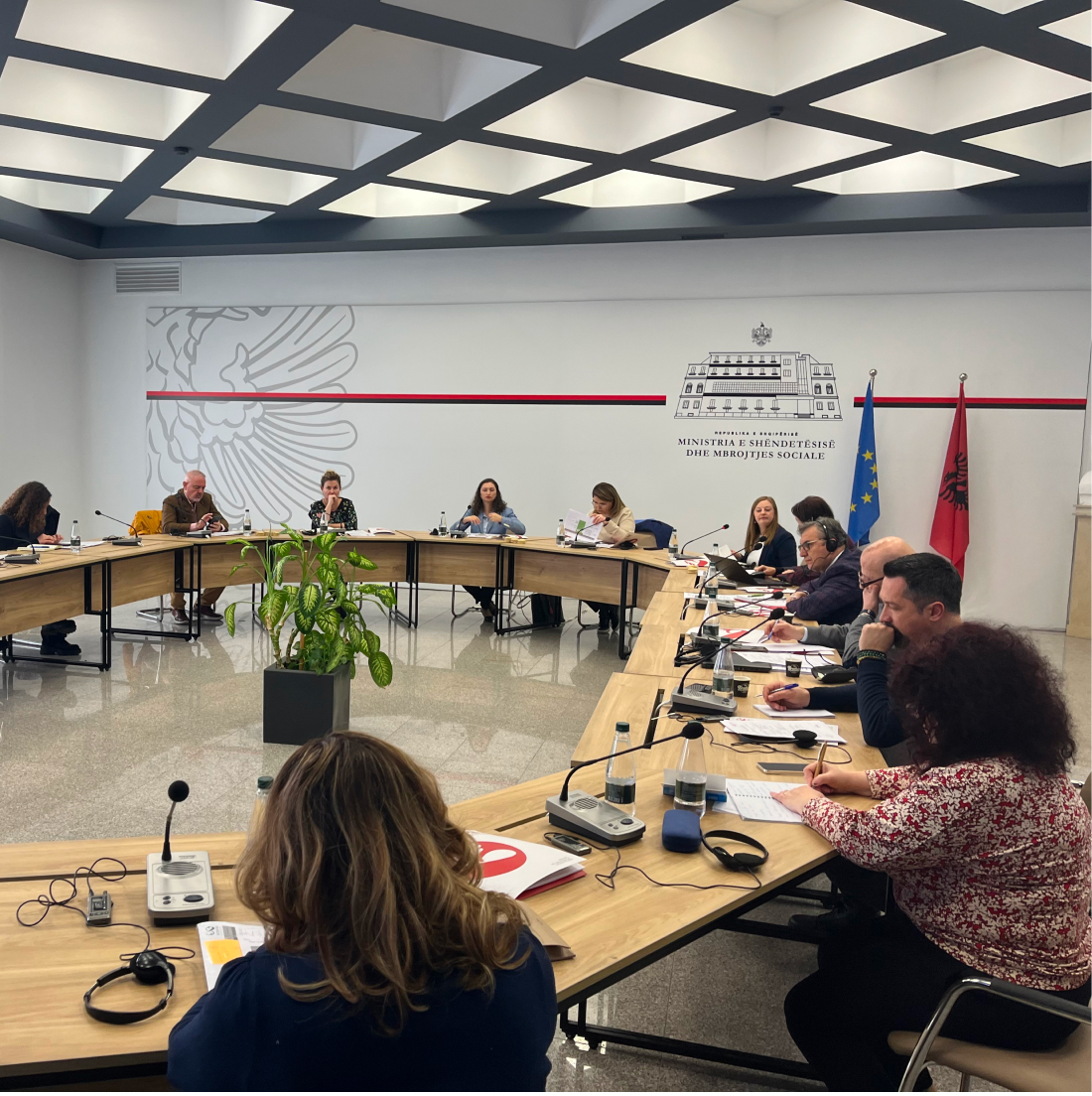
The Project’s implementation will be managed by the Project Implementation Unit, consisting of a Team Leader and three Component Leaders, based in Tirana and responsible for the overall coordination with partners and stakeholders to ensure a smooth and successful project implementation and avoid duplication in activities of different actors. The Swiss Cooperation Office (SCO) in Tirana will oversee the Project progress.
Meet our partners